
Audi Q3: Tires with Emergency Running Characteristics, Repairing
Wheel and Tire General Information / Chassis / Audi Q3 (8U) 2011-2018 Service Manual / Tires with Emergency Running Characteristics, Repairing
General Information
 Caution
Examining damaged tires should only be performed by trained personnel.
 WARNING
- Run-flat tires must be replaced after they have gone flat.
- Pay close attention to the installation instructions.
- The wheel must be inspected before mounting, as with conventional wheel/tire systems.
- The wheels should be checked for damage after a flat tire (true running, axial run-out, other damage) because the wheel could be damaged in an emergency by driving through a pothole.
- A damaged wheel should be replaced.
 Note
Note
- Flat tire sprays may be used on tires with emergency running characteristics (SST).
- Tires must be replaced after running flat.
- Observe the manufacturer mounting instructions.
Special Tools
Special tools and workshop equipment required
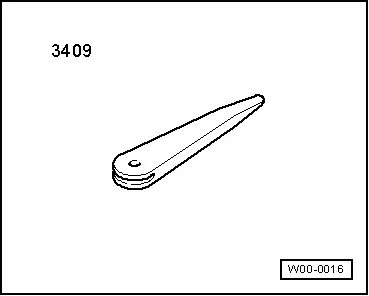
- Trim Removal Wedge -3409-
- Wheel Lock Set -T10101-
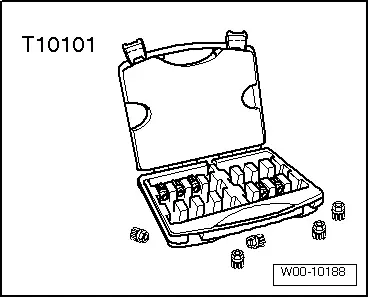
- Wheel Lock Set -T10101A-
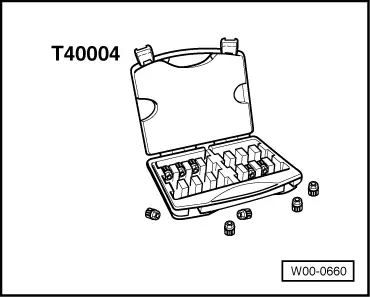
- Wheel Lock Set -T40004-
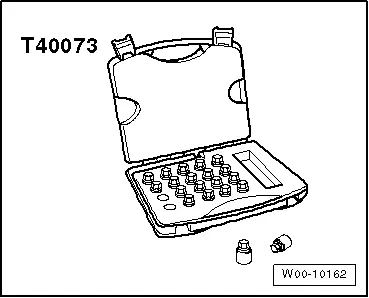
- Wheel Lock Set -T40073-
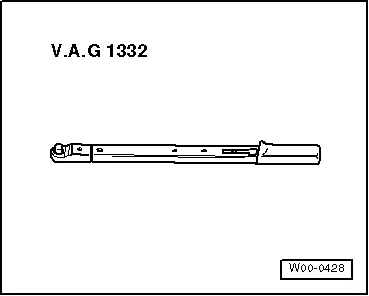
- Torque Wrench 1332 40-200Nm -VAG1332-
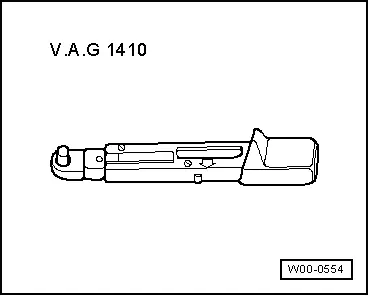
- Torque Wrench 1410 -VAG1410-
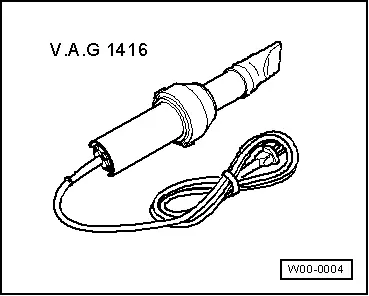
- Hot Air Blower -VAG1416-
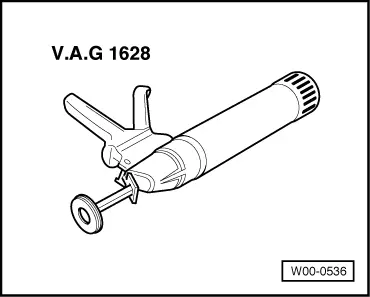
- Cartridge Gun -VAG1628-
- Wheel Centering System Adapter -VAS5271-
- Hunter RFT33VAG Road Force Touch Wheel Balancer -VAS6230B4-
- Wheel Balancer Clamping Adapter - 5 Lug -VAS6243-
- Tension Plate -VAS6652-
- Pressure Bolt -VAS6652/1-
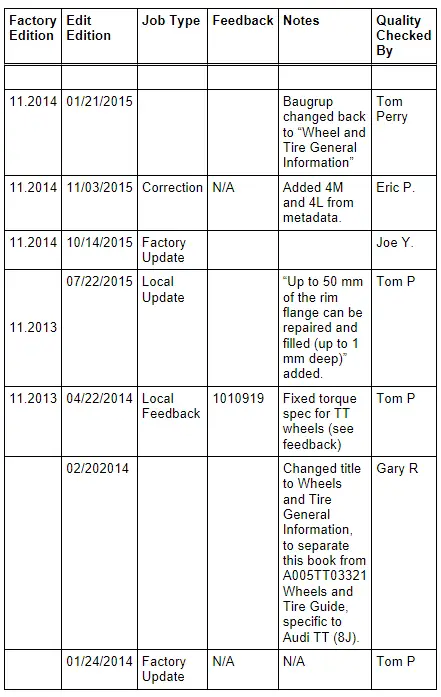
Revision History
DRUCK NUMBER: A00ARRA0021
READ NEXT:
 General, Technical data
Safety Precautions
Start/Stop System Safety Precautions
When Working on Vehicles with the Start/Stop System, Observe
the Following:
WARNING
Danger of personal injury because the engineSEE MORE:
Correct safety belt positioning
Fig. 58 Lap/shoulder belt positioning
Fig. 59 Safety belt positioning for pregnant women
Fastened safety belts only offer optimal protection
during an accident and reduce the risk of serious
injury or death when they are positioned
correctly. Furthermore, the correct safety belt
position holds the
Refueling
Messages
The following messages may appear depending
on the vehicle equipment:
Messages
If the indicator light appears
with a corresponding
message, refuel the vehicle.
Tank system: malfunction!
Please contact
Service
There is a malfunction in the fuel tank system.
Drive to an authorized Audi d
© 2019-2026 Copyright www.auq3.net | 0.0089
